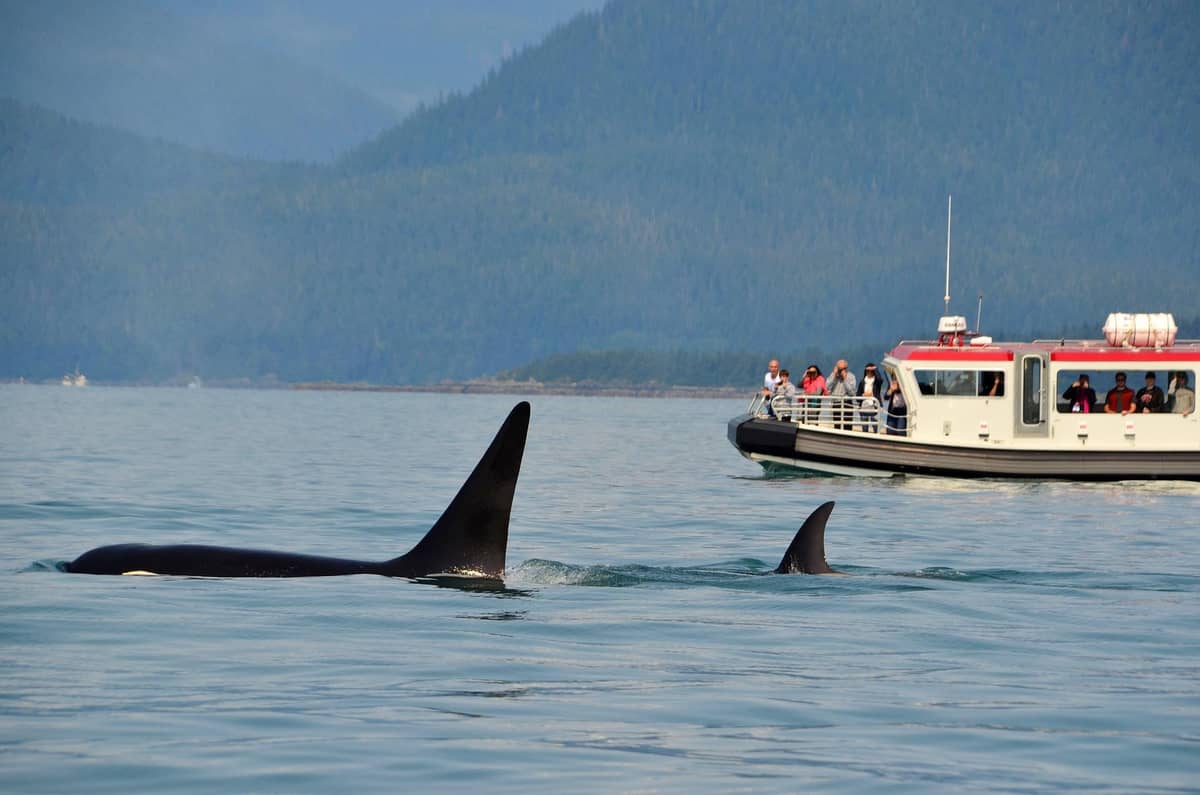
 Long hours
Your balcony
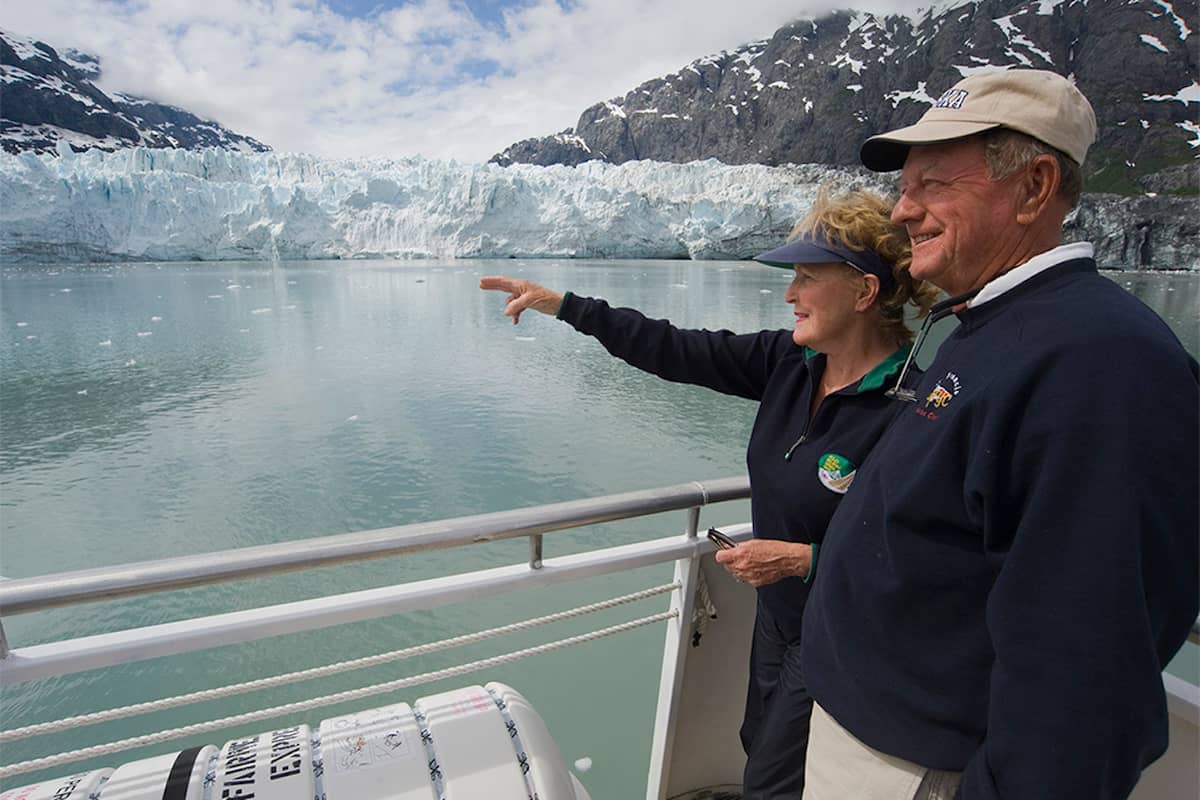
Private and sheltered
- Best for
- Cruising up the bay
- Glacier stop
- Depends on the side
- Comfort
- High
Guides
Language
EnglishCurrency
US dollar · $GetYourGuide shows prices in the currency you choose.
Guide · Where to watch
A balcony feels like the obvious upgrade for a day among glaciers. The park's own advice is simpler: be outside. Here is how to use a balcony well, when the open decks beat it, and how to plan your day around the hour at the ice.
Editorial team, glacierbayalaskacruise.comUpdated October 17, 2026Reading time 6 min16 sources
The quick version
People planning an Alaska cruise to Glacier Bay often ask whether to book a cabin on the left or the right of the ship. The National Park Service answers a slightly different question: the best side of the ship to be on is outside, especially during the time near the glaciers.1 In other words, where you stand matters more than which cabin number you hold.
That advice makes sense once you know the shape of the day. Ships usually spend 9 to 10 hours in the bay.5 They follow a similar course from Icy Strait up the West Arm into Tarr Inlet to Margerie Glacier, and back.6 On the way up, one shore passes your side of the ship; on the way down, the other does. Over a full day, both sides of the ship see the bay.
The real highlight is a single stop. At some point in the day the ship halts in front of a tidewater glacier for about an hour.2 During that hour the open decks at the front and back of the ship, and the rails along the sides, give the widest view of the ice. A balcony gives you a private view of whatever the ship is facing, and the ship decides that, not you.
Your day
The evening before
It is left in your stateroom before the ship arrives.7
Early morning
Watch the lower bay for whales and birds.8
Morning
Four hours or more among the glaciers.3
The glacier stop
About an hour in front of the ice.2
Afternoon
The same shores pass the other way.6
A balcony earns its price on the long stretches of the day. Ships spend 4 or more hours in the glacier areas of the West Arm alone.3 For most of that time you can sit on your own balcony with a coffee, a blanket and binoculars, watching the shoreline slide by without jostling for space. On a cold morning, being able to step back inside for a few minutes is a real comfort.
It is weaker during the glacier stop. If the ship faces the ice with your side pointing away, your balcony looks out over open water. Then the best place is upstairs at the rail, among other passengers. A good plan uses both: the balcony for the morning cruise up the bay, the outer decks for the hour at the ice, then the balcony again on the way back down.
On the trip this site books, the listing includes a cruise cabin in the category you select, and it does not name the ship. Ask before you book which cabin types are available and whether a balcony costs extra on your dates. If it does not fit your budget, an inside cabin and a warm coat give you the same glacier, as long as you are out on deck when it counts.
Cabins and decks
| Spot | Up the bay | At the glacier | Comfort |
|---|---|---|---|
| Balcony cabin | Private, relaxed | Good if your side faces the ice | Warm room behind you |
| Ocean view cabin | View through glass | Limited | Warm, but no sound |
| Inside cabin | None | None | Go up on deck |
| Open upper deck | Wide, windy | The widest view | Cold, crowded |
| Forward lounge | Wide, through glass | Good, if you find a seat | Warm, often busy |
A general guide; ship layouts differ. The park's own advice is to be outside near the glaciers.1
Three spots
Long hoursPrivate and sheltered
 At the ice
 Quiet
QuietDecision helper
Choose the line that fits you best
The best side of the ship to be on is outside, especially during the time near the glaciers.
When the ship stops, the decks fill quickly. Go up early, before the glacier stop begins, and claim a spot at the rail. The bow and the upper decks give the widest panorama; the side rails put you closer to the water and to the icebergs floating past. Stay put once you are there; moving around a crowded deck costs you the moments that matter.
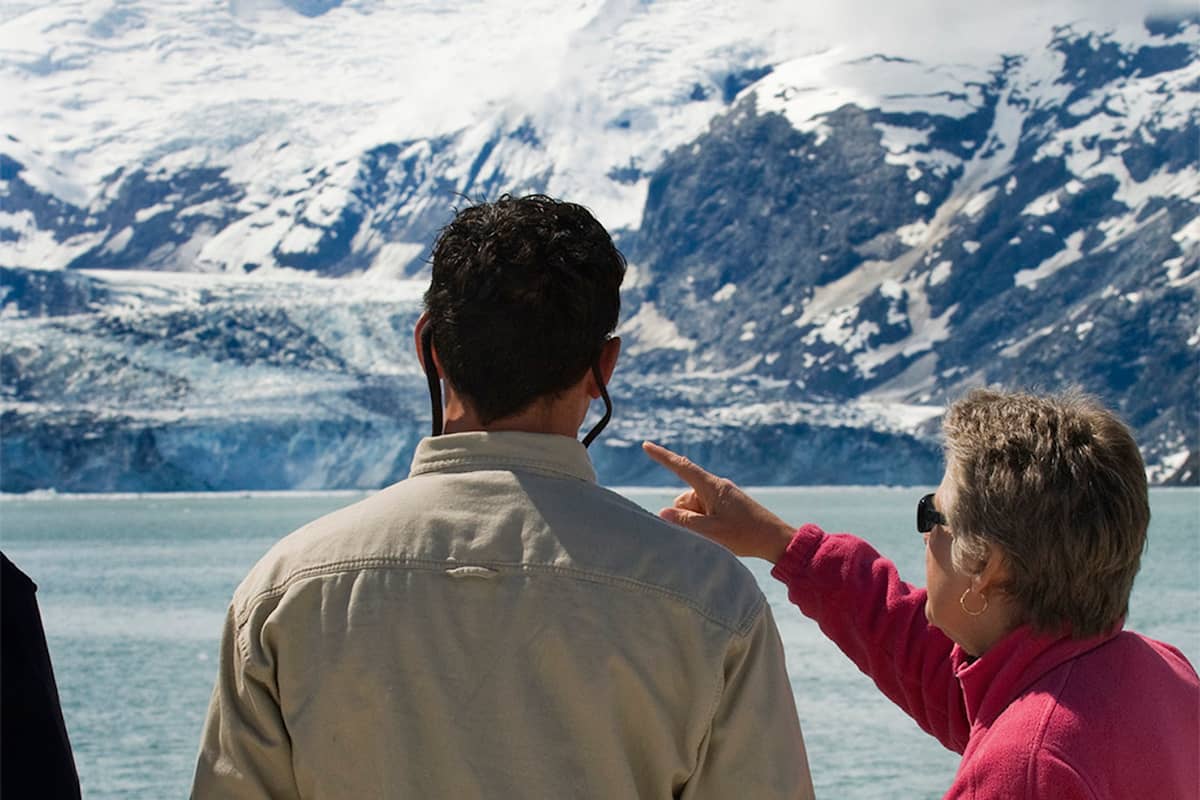
Rangers make the hour richer. National Park Service rangers board the ship to narrate the visit and staff an information desk.9 Ask at the ranger desk when the talks take place, and listen out for them while you stand at the rail. If the ranger points out a seal on an iceberg, binoculars turn a white speck into an animal.
Remember what the glacier will and will not do. Calving happens sometimes not at all during a one-hour visit and sometimes several times within it; no one can predict it.10 Watching from the open deck lets you hear the ice as well as see it: the crack, the rumble and the splash are half the experience, and a closed balcony door cuts them off.
Checklist
Cost calculator
Enter how many of you are going for a starting total per trip.
Total from$4,093
per participant from $2,047
Check availabilityfree cancellationTotals use each listing's lowest per-traveler price on GetYourGuide, turned into your currency with the euro reference rate; you see the exact sum when you book.
Video
Nothing loads from YouTube until you tap play.
The Glacier Bay Alaska cruise scenery changes through the day, and each part has its own best viewing spot. The day often starts early, and the park suggests being ready to wake up early.11 In the lower bay, look for whales and sea birds from the sides of the ship. As you move north, the forest thins and the mountains close in, which is the time for a balcony or a quiet corner at the stern.
Higher up the bay, the peaks grow taller and the ice comes into view. Mount Fairweather, the tallest mountain in the park, rises to 15,300 feet.12 On a clear day it dominates the western horizon; on a cloudy one it disappears completely. In Southeast Alaska an average year brings about 4 sunny days per month.13 Grey light is the norm, and it brings out the blue of the ice.
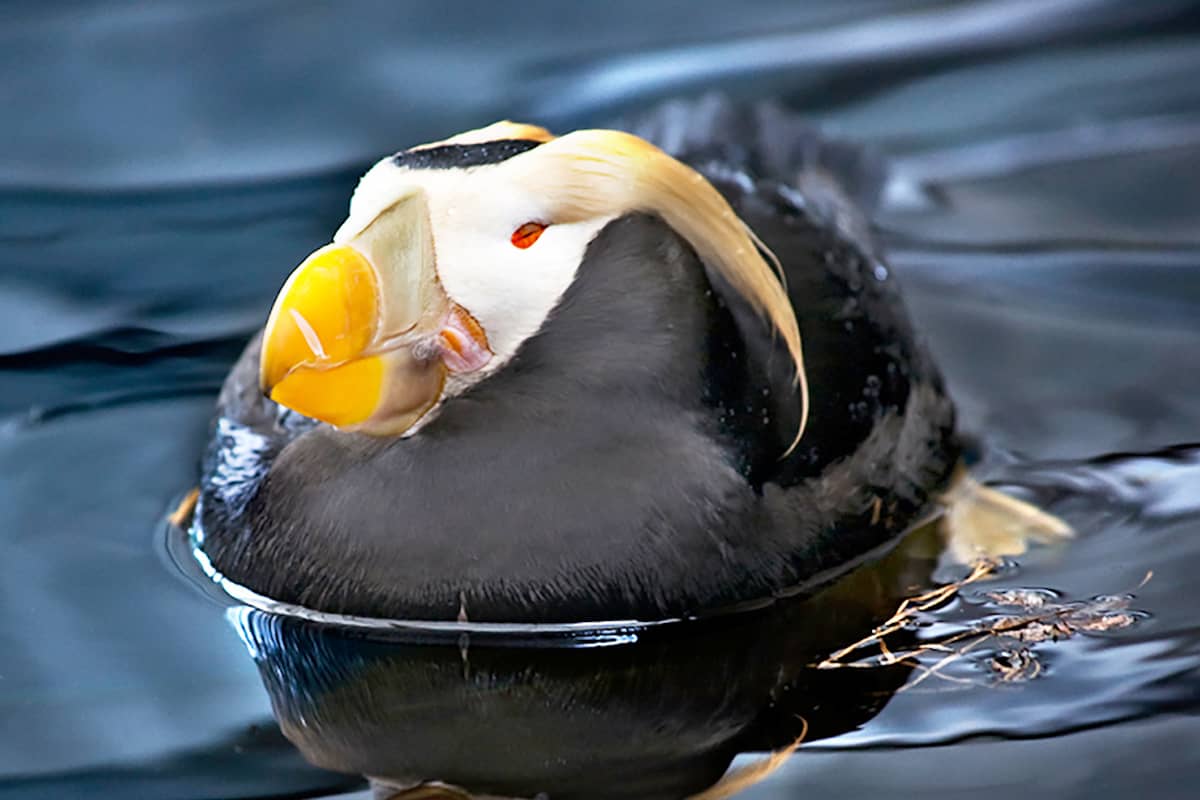
On the way out, the light is often lower and softer, and the ship passes the same shores in reverse. That is the moment for the side of the ship you missed in the morning. Wildlife is worth a last look: sharp-eyed passengers regularly spot brown bears, bald eagles, harbor seals, humpback whales, mountain goats and puffins.14
Good Glacier Bay Alaska cruise pictures start with patience rather than equipment. A phone takes fine pictures of the glacier face in grey light; a camera with a longer lens helps for wildlife and for details in the ice. Tap to expose for the ice rather than the sky, or the blue will wash out to white. Take a few wide shots that include the ship's rail or other passengers for scale.
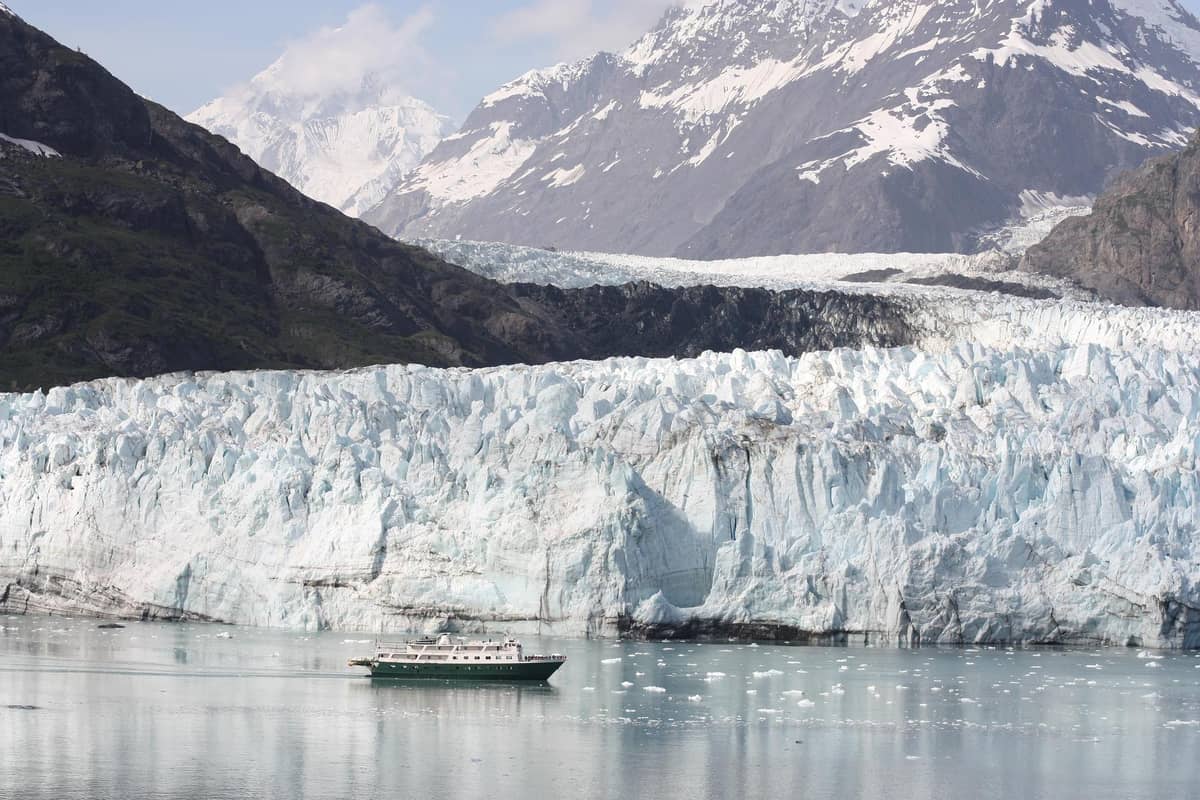
Scale is the hardest thing to capture. The mountains and glaciers are so large that they look small in photographs. Margerie Glacier stands about 200 feet above the water and is 0.85 miles wide.15 Include a small boat, a floating iceberg or the edge of the ship in the frame, and the size of the ice face becomes clear to anyone who looks at the picture later.
Video catches what photographs miss. Start recording when the ice begins to crack, not when it falls, and keep the camera still on the rail. After that, let the lens rest and simply look. The ranger commentary, the cold air and the sound of the glacier are what you will remember, and no balcony or lens replaces standing outside for that hour.
Do not let the cold send you inside too early. Summer highs in the bay run between 10 and 15 °C.4 In front of the glacier, the air coming off the ice feels much colder, and you will be standing still for an hour. The park suggests waterproof boots, rain gear, a hat, gloves and wool or pile layers or a warm coat.16
Plan your layers like a winter walk. A thin base layer, a warm middle layer and a windproof, waterproof shell are enough for most days. Add gloves you can use a phone with, a warm hat and a scarf or buff. Hot drinks from the ship's cafés help, and a balcony gives you a warm room to retreat to between stretches outside.
The trip this site books puts Glacier Bay on day 6 of a 9-day package from Vancouver, from $2,047. Its listing asks you to bring warm and weather-appropriate clothing, comfortable shoes and a camera. It is new and has no reviews yet; payment can wait until later, and backing out is free while more than 24 hours remain.
Plan the voyage
Book today, pay nearer the time, and cancel at no charge until 24 hours ahead.
Outside, says the park. The best side of the ship is outside, especially near the glaciers.1
No, but it helps. A balcony is comfortable for the long hours up the bay; the open decks are better at the glacier stop.32
About an hour. The ship stops in front of a tidewater glacier for approximately one hour.2
Over the day, yes. Ships sail up the West Arm and back the same way.6
Cooler than you expect. Summer highs are 10 to 15 °C, and the air off the ice is colder.4
The listing does not say. It includes a cruise cabin in the category you select; ask about types and prices before booking.
Sources
Keep reading