 In the park
Guides
Language
EnglishCurrency
US dollar · $GetYourGuide shows prices in the currency you choose.
Guide · Wildlife
Glacier Bay Alaska humpback whale cruise: whales, bears and seals
Ice is the headline in Glacier Bay, but the animals are what keep people at the rail all day. Here is what lives in the bay, when the whales are there, where to look from a ship and the rules that keep boats at a distance.
Check availabilityfrom $2,047 · cancel without a fee
Editorial team, glacierbayalaskacruise.comUpdated October 17, 2026Reading time 6 min16 sources
At a glance
- 01Humpback season
- Numbers rise in mid-June and peak in July and August.1
- 02Where whales feed
- Mostly in the lower bay: Sitakaday Narrows, Whidbey Passage and South Marble Island.2
- 03Seals
- Over 2,000 gather in Johns Hopkins Inlet, the largest group in the bay.3
- 04Bears
- Brown bears are often seen north of Tidal Inlet in the West Arm.4
- 05Distance
- Boats must stay more than a quarter nautical mile from any humpback whale.5
Why the bay fills with life every summer
Glacier Bay is a summer feeding ground. Humpback whales travel to the bay in large numbers in the summer months, mainly to feed.6 They converge on its rich waters in summer and spend the winter elsewhere, where they breed and give birth.7 The same cold, nutrient-rich water that feeds the whales also feeds the fish, the seabirds and the seals you see around the ice.
A cruise ship is a good platform for watching it all. The park says sharp-eyed cruise passengers regularly spot brown bears, bald eagles, harbor seals, humpback whales, mountain goats and puffins.8 A day in the bay is not a wildlife safari, and no ship can promise an animal, but it passes through enough habitat to give you real chances from the deck.
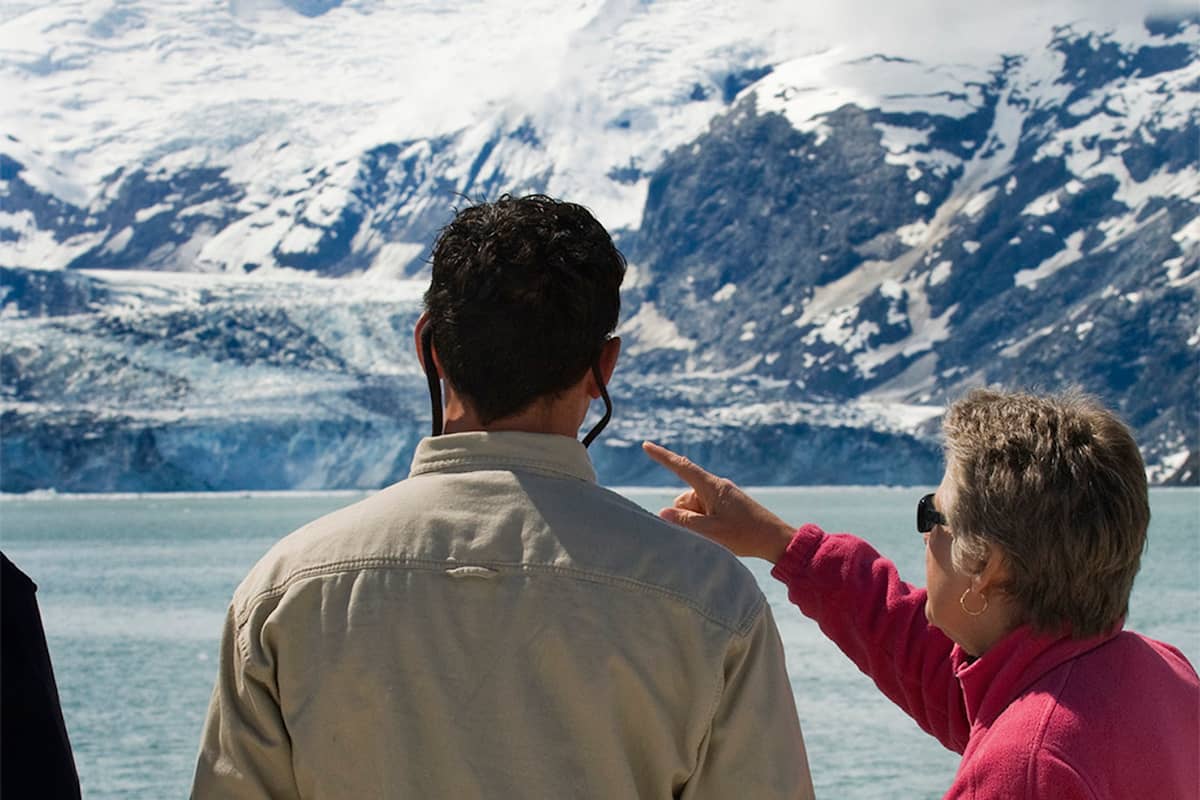
That makes any Glacier Bay Alaska wildlife cruise a lesson in patience. The bay is vast, and animals look smaller than you expect from the height of a big ship. Rangers on board help you spot them, and binoculars make the difference between a dark shape on the water and a whale's back. Ask the rangers where they have seen animals recently.
The whale year
When humpbacks are in the bay
Humpback whales: when and where
Timing matters more than luck. The park's monitoring shows that whale numbers typically rise in mid-June, peak in July and August, are somewhat lower in April, May and September, and are lowest from October through March.1 If whales are the main reason for your trip, a sailing in July or August gives you the best odds.
Location matters too. Humpback whales are most often seen in the lower region of Glacier Bay, in Sitakaday Narrows, Whidbey Passage and the waters around South Marble Island.2 On a cruise day that means the first and last hours, when the ship passes through the lower bay on its way in and out. Watch for the spout first: a puff of mist above the water, then a dark back and perhaps a tail.
The whales have a long history here. Humpback sightings were first reported in Glacier Bay in 1899, and by the 1930s they were commonly seen in the bay.9 The park has monitored them every summer since 1985, and in 2013 researchers identified 237 individual whales, including 10 calves, in Glacier Bay and Icy Strait, the highest number since monitoring began.10
Who lives where
Wildlife of the bay and where to look
| Animal | Where to look | Tip |
|---|---|---|
| Humpback whale | Lower bay, South Marble Island | Watch for the spout |
| Harbor seal | Icebergs, Johns Hopkins Inlet | Scan the floating ice |
| Steller sea lion | South Marble Island | Best seen from the day boat |
| Brown bear | Shores north of Tidal Inlet | Look for movement on beaches |
| Puffin | South Marble Island | Small and fast, use binoculars |
| Mountain goat | Cliffs above the bay | White dots on dark rock |
Where the National Park Service reports these animals.231148
Bookable
Three ways to get closer to the wildlife
In the park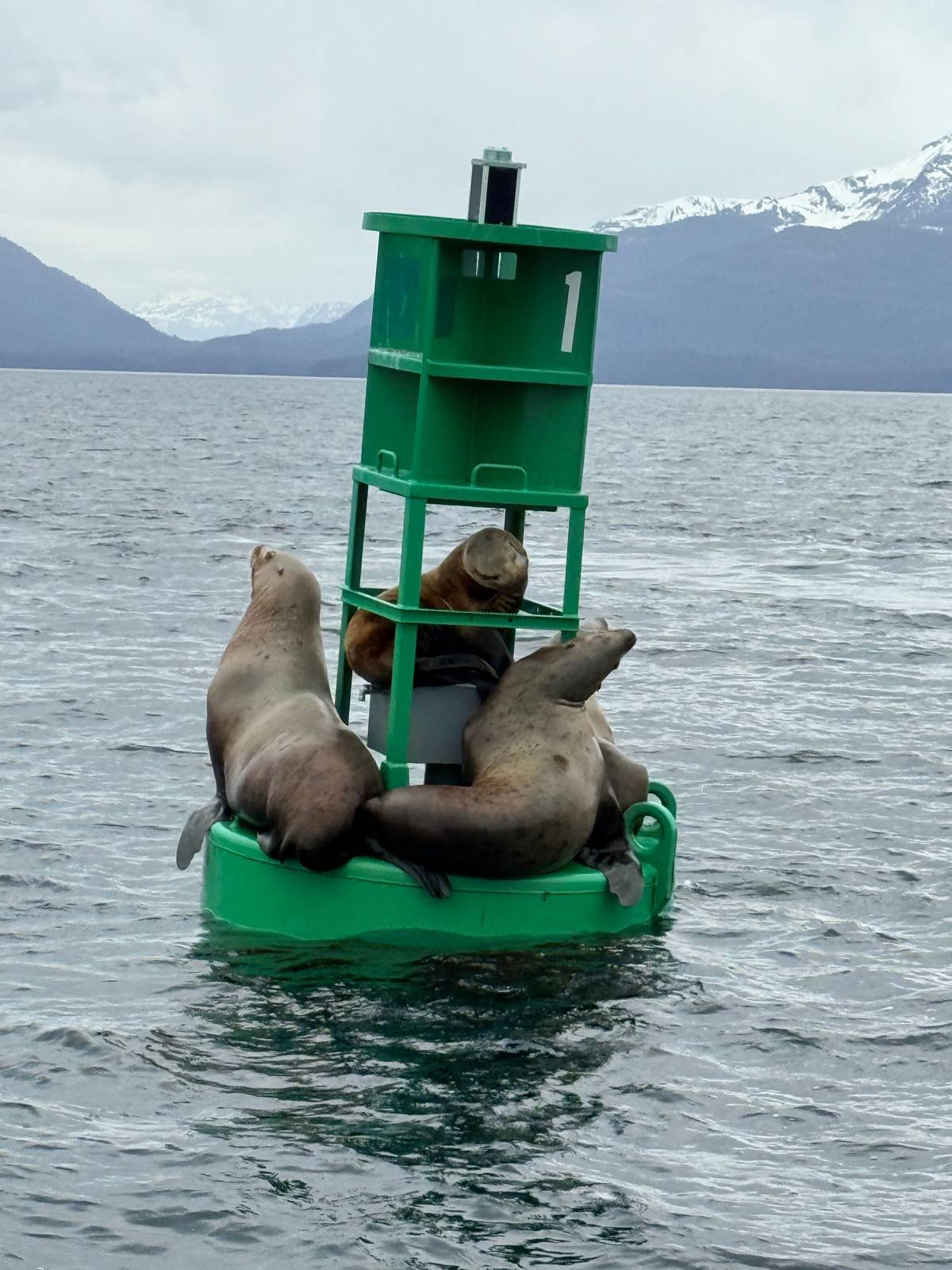 Port day
 Port day
Decision helper
How to add wildlife to your trip
Start from the animal you most want to see
Sail in July or August
Whale numbers peak in those months.1
A Juneau whale tour
A 3-hour whale cruise from Juneau, rated 4.79.
The day boat
It stops near South Marble Island.11
Scan the West Arm
Brown bears are commonly seen north of Tidal Inlet.4
Binoculars at the glacier
Icebergs serve as resting spots for harbor seals.12
Humpback whale sightings were first reported in Glacier Bay in 1899; by the 1930s they were commonly seen in the Bay.
Whale watching in Glacier Bay, Alaska, from a ship
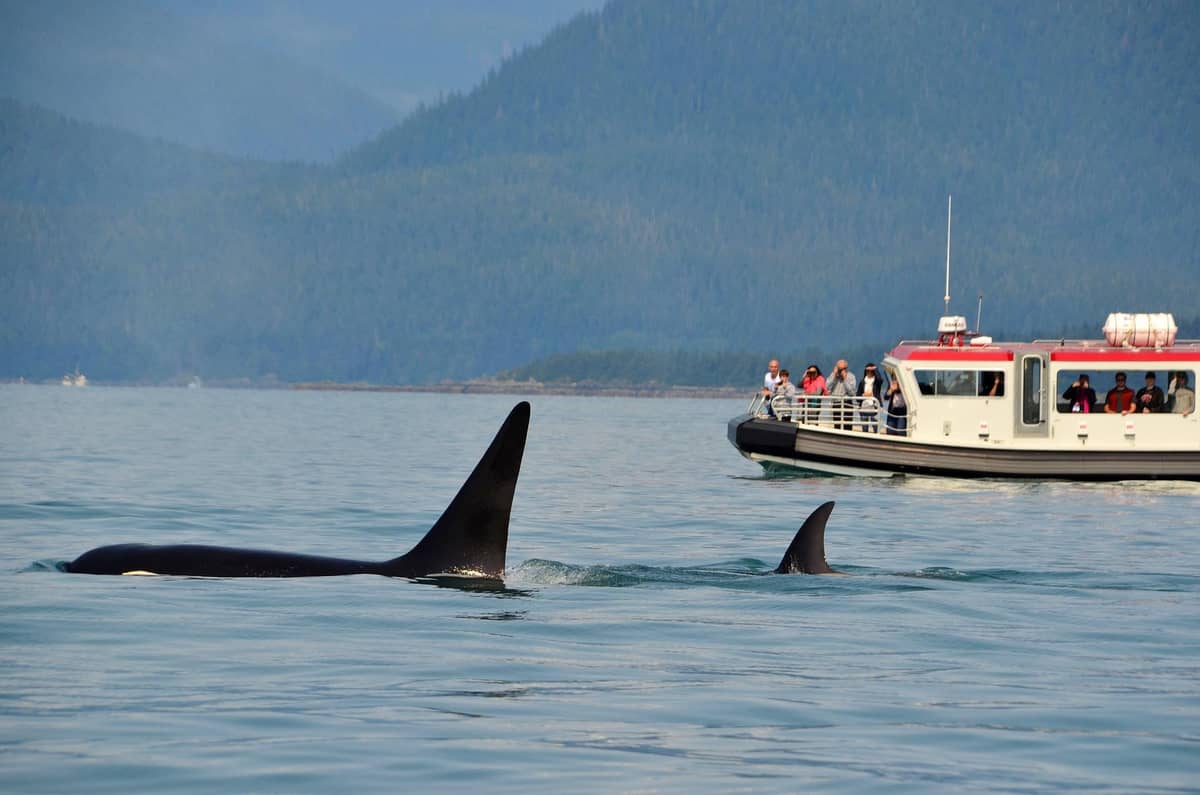
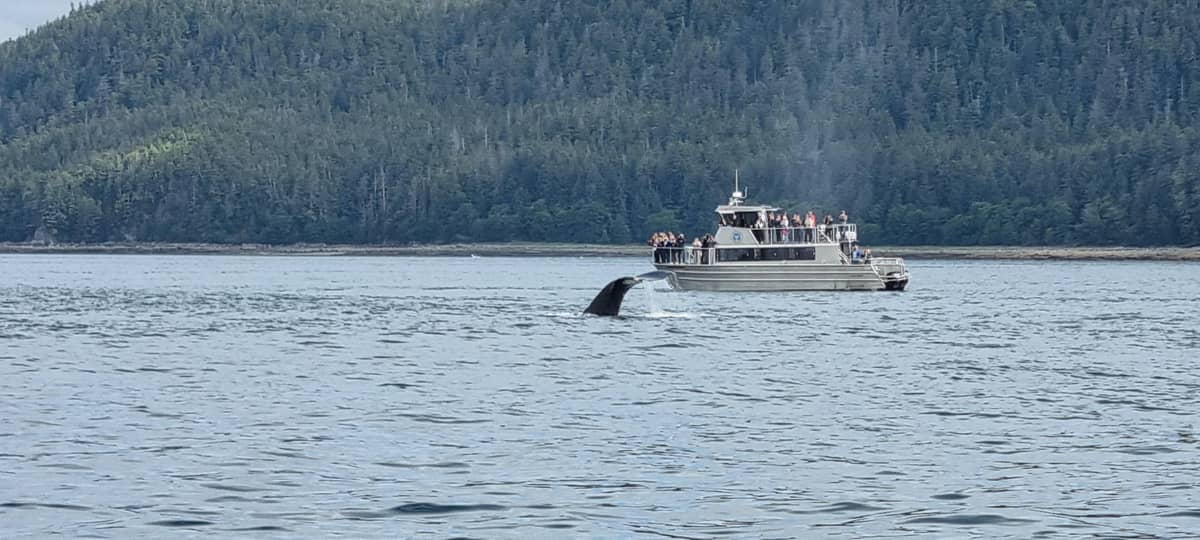
Whale watching in Glacier Bay, Alaska, works differently from a dedicated whale tour. The ship does not chase animals. All boats, including kayaks, must stay more than a quarter nautical mile from any humpback whale.5 A big ship keeps to its course, and the whales come into view or they do not. That is good for the whales, and your best tool is a pair of binoculars.
Position yourself well. In the lower bay, stand at a side rail or on your balcony rather than at the bow; whales may surface anywhere along the ship. Look for spouts, flocks of birds on the surface, or a sudden splash. If you hear an announcement, move quickly: a whale near a moving ship may be in view only briefly.
For closer encounters, combine the bay with a whale tour in port. The trip this site books calls at Juneau on day 5, and optional shore excursions there are not included in the price. A 3-hour whale watching cruise from Juneau starts from $108 and is rated 4.79 from 579 reviews. Book it separately, and plan its timing around the ship's hours in port.
Checklist
Spotting wildlife from the deck
01
Bring
- Binoculars, one pair each if you can
- A camera with a zoom lens
- Warm layers for long waits outside
02
Watch for
- Spouts of mist above the water
- Groups of birds on the surface
- Movement on beaches and white dots on cliffs
Cost calculator
What wildlife days cost your group
Pick an outing, add your group, and read the starting total.
People
Total from$548
per participant from $274
Check availabilityfree cancellationTotals use each listing's lowest per-traveler price on GetYourGuide, turned into your currency with the euro reference rate; you see the exact sum when you book.
Video
Glacier Bay National Park - 2 Days of Whales, Glacier Calving, Hikes & More
Nothing loads from YouTube until you tap play.
Seals, sea lions and seabirds
Harbor seals are the animals you are most likely to see near the ice. Icebergs from Margerie Glacier serve as resting places for harbor seals, sea otters, black-legged kittiwakes and other birds.12 Johns Hopkins Inlet holds the largest seasonal gathering of harbor seals in Glacier Bay, typically numbering over 2,000.3 Seals haul out on the floating ice to give birth, rest and molt.
The park closes their inlet to boats in early summer. Johns Hopkins Inlet is closed to all vessels from May 1 to June 30 each year.13 Cruise ships may enter it only in late summer, once the harbor seal protections end.14 From Jaw Point, at the mouth of the inlet, binoculars may show dark shapes on the ice that turn out to be seals.
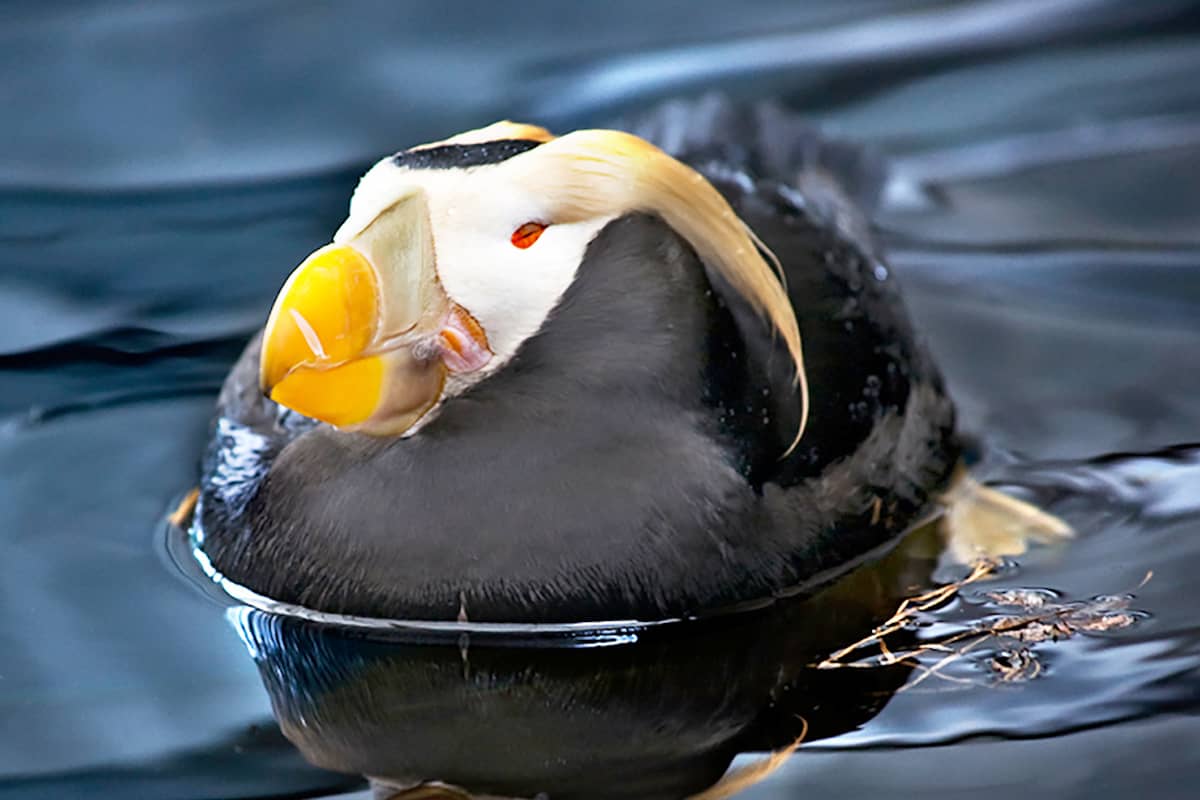
Sea lions and seabirds crowd the lower bay. The park says there may be over 300 sea lions on the rocks of South Marble Island.11 Tufted and horned puffins, common murres, cormorants and kittiwakes nest on the same island. The day boat from Bartlett Cove cruises close to the island early in its route, a good way to see the colony up close.
Bears and mountain goats on the shore
A bear on the shore is the sighting to hope for. Brown bears are commonly seen north of Tidal Inlet in the West Arm and north of Adams Inlet in the East Arm.4 Ships pass through the West Arm on their way to the glaciers, and a bear on a beach can be spotted from the rail if you scan the shoreline slowly.
Look for movement rather than shape. A bear on a gravel beach at a distance of a mile or more looks like a dark rock until it moves. Bears often walk along the tide line looking for food. If a ranger spots one, ask for the landmarks around it and follow the line of the shore from there.
Higher up, watch the steep slopes for white dots. Mountain goats live on the cliffs above the bay, and the park lists them among the animals cruise passengers regularly spot.8 Bald eagles perch on snags along the shore and on icebergs. A good pair of binoculars, a little patience and a ranger's tip are often all you need for one of these sightings.
Getting closer: the day boat and port tours
A big ship gives you the panorama; a smaller boat gives you the detail. The park's daily tour boat leaves Bartlett Cove each summer morning and travels 130 miles through the bay.15 A park ranger is on board to help spot wildlife and give commentary.16 It also stops near South Marble Island, where the sea lions and puffins gather.11
The day boat booked on this site is a catamaran day of 8 hours from Bartlett Cove, starting from $274. Its policy allows cancellation up to 3 days ahead, with a fee, and it has just 2 reviews. Reaching it means a flight or ferry to Gustavus and usually a night there, which fits best before or after a cruise.
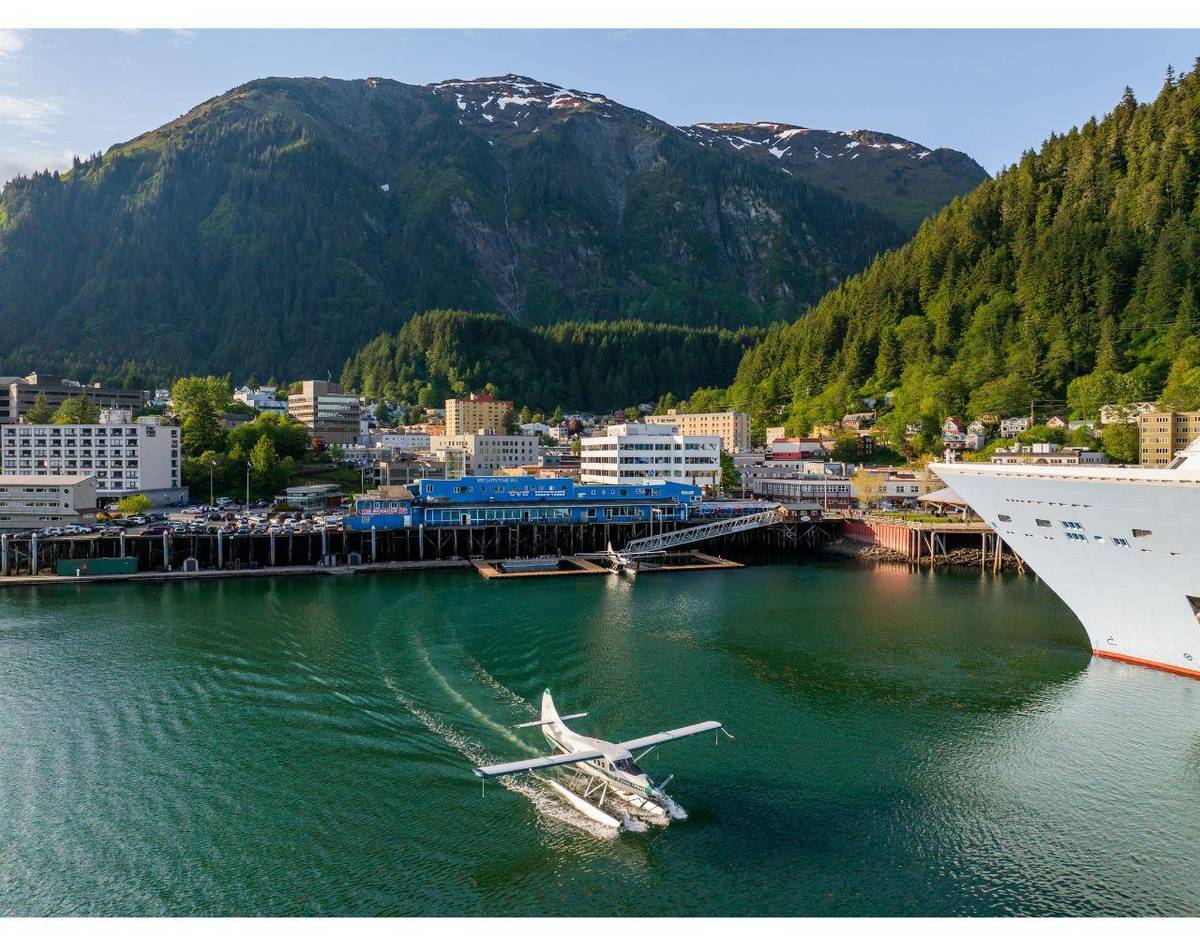
On a cruise, Juneau is the easier place to add a whale tour. A 5-hour tour combining Mendenhall Glacier and whale watching starts from $199, and its listing promises your money back on a day without a whale sighting. The cruise trip this site books, a 9-day package from Vancouver from $2,047, gives you Juneau on day 5 and Glacier Bay on day 6.
Plan the voyage
Nine days from Vancouver into Glacier Bay
Book today, pay nearer the time, and cancel at no charge until 24 hours ahead.
You ask,we answer.
When are humpback whales in Glacier Bay?
Mostly in summer. Numbers rise in mid-June and peak in July and August.1
Where in the bay do whales feed?
In the lower bay. Sitakaday Narrows, Whidbey Passage and around South Marble Island are the usual places.2
How close can ships get to whales?
Not within a quarter nautical mile. All boats must stay more than a quarter nautical mile from any humpback whale.5
Will I see bears from the ship?
Possibly. Brown bears are commonly seen north of Tidal Inlet in the West Arm.4
Where are the seals?
On the floating ice. Johns Hopkins Inlet holds over 2,000 harbor seals in its seasonal gathering.3
Is there a whale tour on this site's cruise?
Not included. Optional shore excursions in Juneau and Ketchikan are booked separately.
How many humpbacks use the bay?
It varies by year. The record was 237 individuals in Glacier Bay and Icy Strait in 2013.10
Sources
Sources and evidence
- 1National Park Service (Glacier Bay)Humpback Whale Research & Monitoring↩
- 2National Park Service (Glacier Bay)Frequently Asked Questions↩
- 3National Park ServiceGlacier Changes Drive New Challenges for Balancing Visitor Access and Natural Resource Protection↩
- 4National Park Service (Glacier Bay)Frequently Asked Questions↩
- 5National Park Service (Glacier Bay)Frequently Asked Questions↩
- 6National Park Service (Glacier Bay)Glacier Bay Fact Sheet↩
- 7National Park Service (Glacier Bay)Basic Information↩
- 8National Park Service (Glacier Bay)Cruise Ships in Glacier Bay↩
- 9National Park Service (Glacier Bay)Humpback Whale Research & Monitoring↩
- 10National Park Service (Glacier Bay)Humpback Whale Research & Monitoring↩
- 11National Park Service (Glacier Bay)Glacier Bay Tour Boat↩
- 12National Park ServiceMargerie Glacier↩
- 13National Park ServiceHarbor Seal - Johns Hopkins Inlet↩
- 14National Park Service (Glacier Bay)Cruise Ships in Glacier Bay↩
- 15National Park Service (Glacier Bay)Glacier Bay Tour Boat↩
- 16National Park Service (Glacier Bay)Glacier Bay Tour Boat↩
Keep reading